5 reasons why Cailabs turns lasercom into reality

#1 Real links, not just lab results.
An optical ground station becomes operational when it proves its performance in real satellite-to-ground links, not just in theoretical optical budgets or controlled lab environments.
That distinction matters. In laser communications, the real challenge is not simply demonstrating that optics can work once; it is proving they can perform under realistic conditions, with repeatable results and a credible path to operations.
Cailabs has already demonstrated multiple bidirectional satellite-to-ground optical links under real-world conditions.
Powered by Cailabs’ patented technologies, TILBA®-OGS is reliable today and ready for future upgrades.
This is not a lab demonstration. This is operational performance.
10+ Gbps today. 100+ Gbps tomorrow.
#2 Deployment is proven, not assumed.
An optical ground station is not operational because it exists on a slide.
It becomes operational when it is installed, validated, and accepted in its real environment.
That means more than shipping hardware. It means a structured deployment path with infrastructure validation, factory acceptance testing, site acceptance testing, installation, and training.
This is what turns an optical ground station from a promising concept into operational infrastructure.
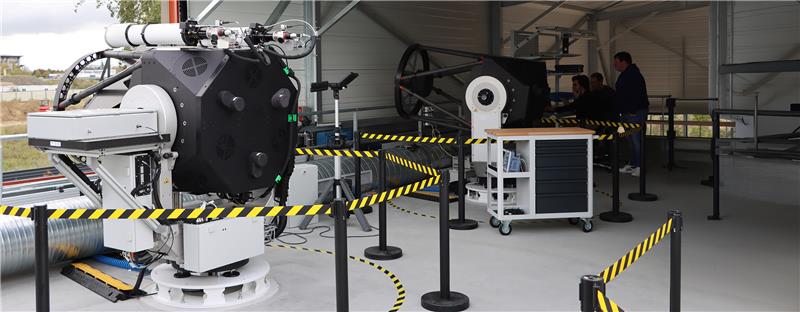
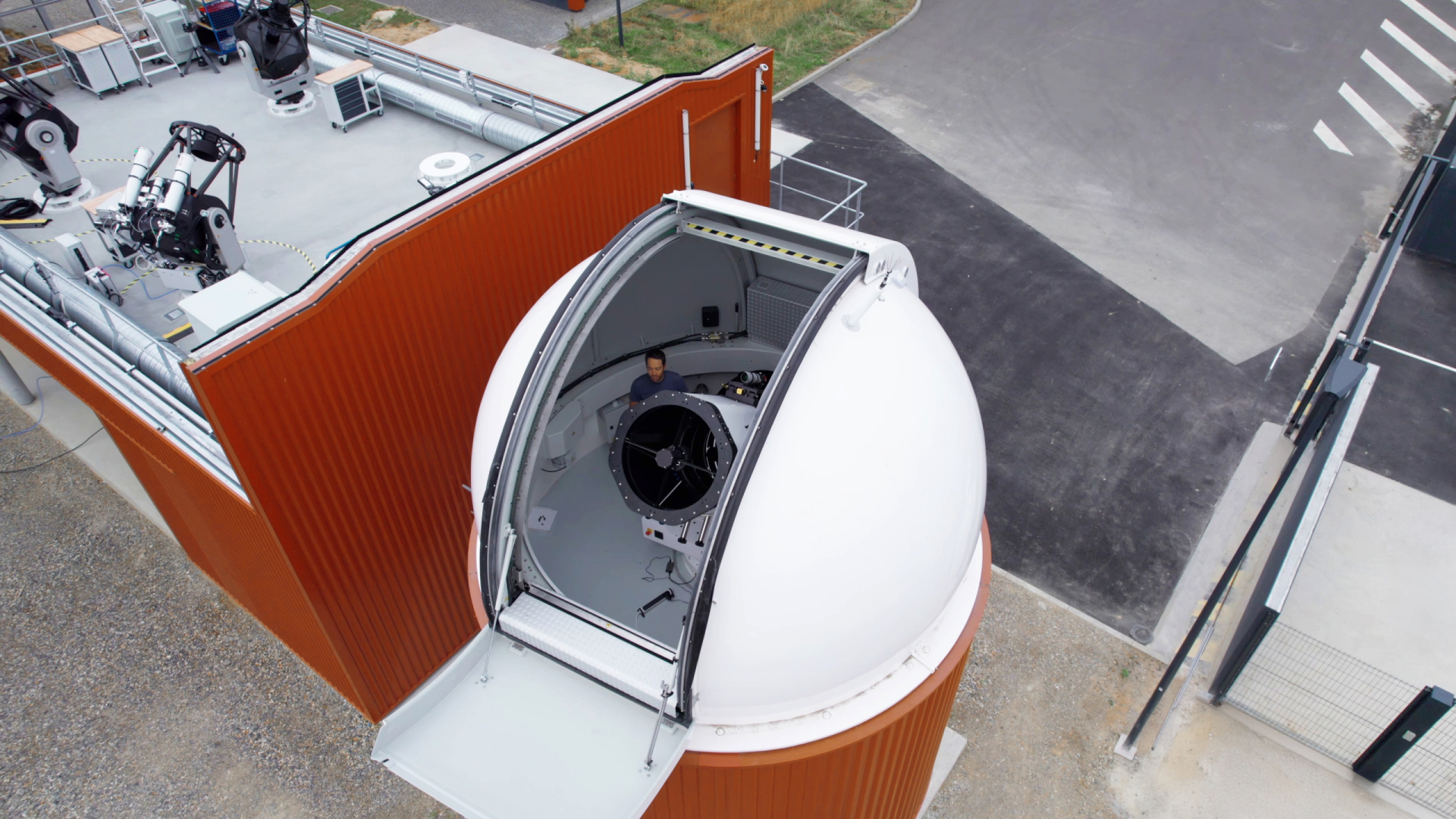
Cailabs has delivered multiple optical ground stations operating in real-world environments all around the world. Not in development and testing.
Deployed, operational, and running today.


#3 Performance in real atmosphere, not only on paper
An OGS is not operational because a static link budget looks good on paper. It is operational when its design remains credible in real conditions.
Clouds, atmospheric turbulence, elevation angle, variability over time, these are not side topics. They are part of the system reality.
That is why OGS design is not just a telescope question, and not just a throughput question. It is a matter of system architecture.
At Cailabs, we believe operational performance comes from getting the trade-offs right: telescope sizing, turbulence handling, interoperability, and mission fit.
And it is also what makes practical deployment possible: the right system can be integrated where missions, networks, and operations actually matter, not only in observatory-style settings.
Built for operation in a real network.
#4 Cailabs is built to scale.
An OGS is not truly operational if it can only be built once.
Operational infrastructure must be repeatable, manufacturable, maintainable, and ready to scale. That means industrial discipline, assembly and validation capacity, and a production model compatible with future network deployment.
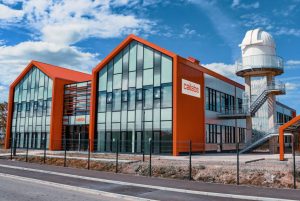
Cailabs produces up to 12 OGS/year, supported by a dedicated assembly and validation platform.
Factory 2027 will scale this capacity to 50 OGS/year by 2028, enabling global optical ground network deployment.
Delivered today. Scalable tomorrow.


#5 Automation and integration, not operational burden.
An OGS is operational only if it fits into existing operations without forcing users to build everything from scratch.
That means automation, remote supervision, manageable scheduling, and practical integration into customer infrastructure and networks.
At Cailabs, we design OGS as a system that can be monitored, operated, and integrated as part of a wider ground architecture. The complexity is handled in the product, not in its operation, making lasercom operations as routine as RF.
No operational complexity. Seamless network integration.
Interested in making lasercom operational?
Contact our team